
Job search answers for new grads and parents
One question per page, answered straight, written by the team behind Career First Nexus — a free 40-day job-search system for recent college graduates and the parents helping them. Last updated September 30, 2026.
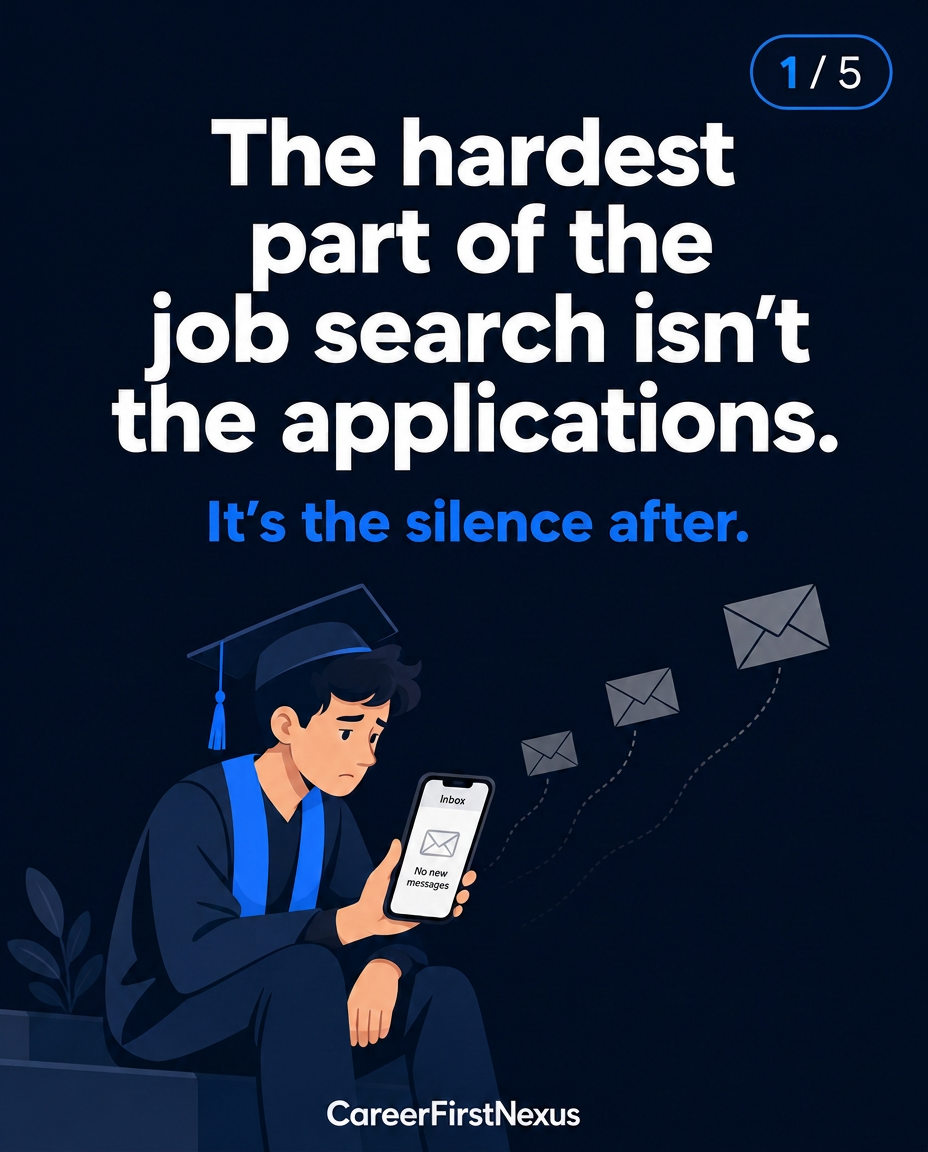
Rejection is the hardest part
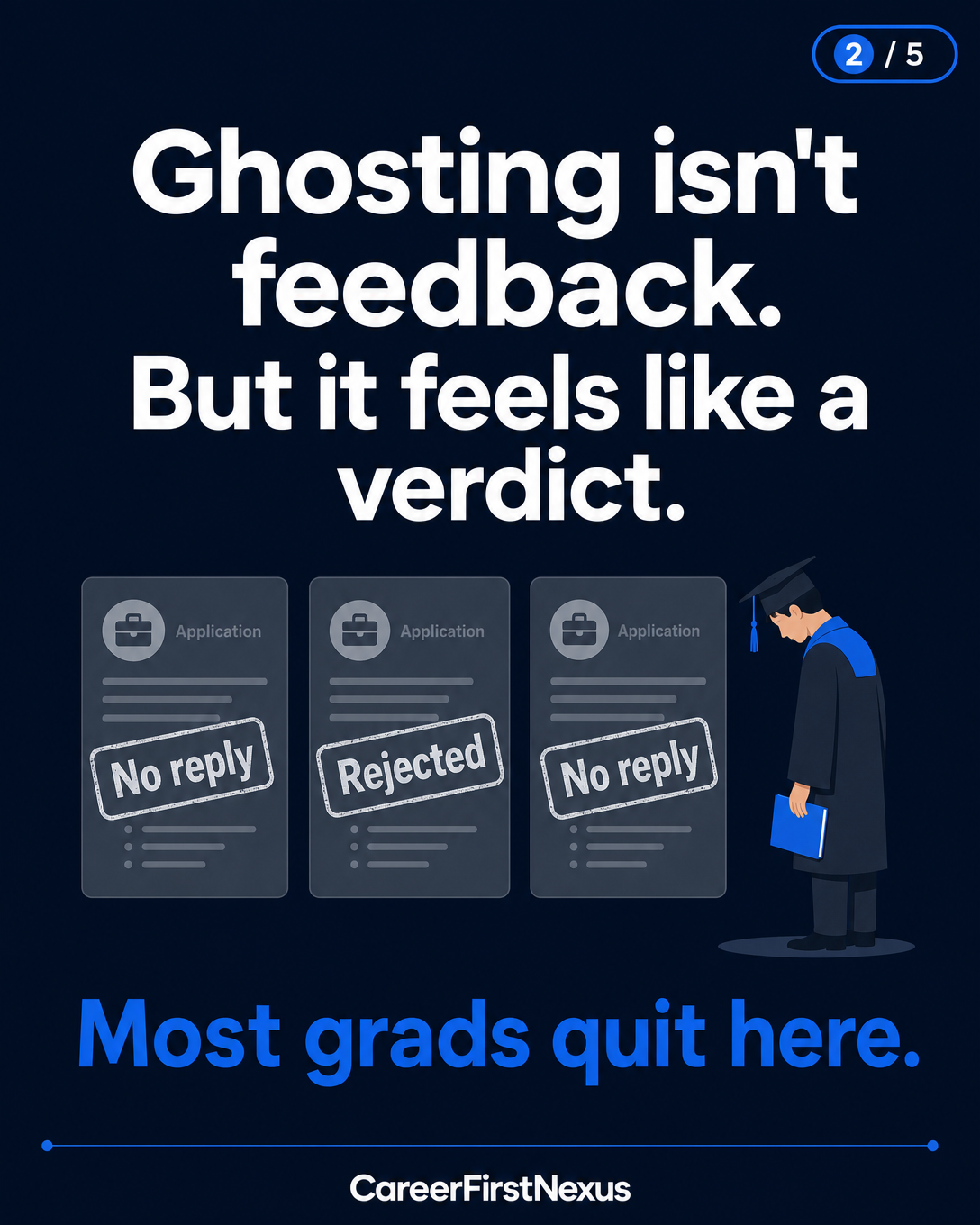
Your graduate won't quit because it's hard. They'll quit because it's quiet.
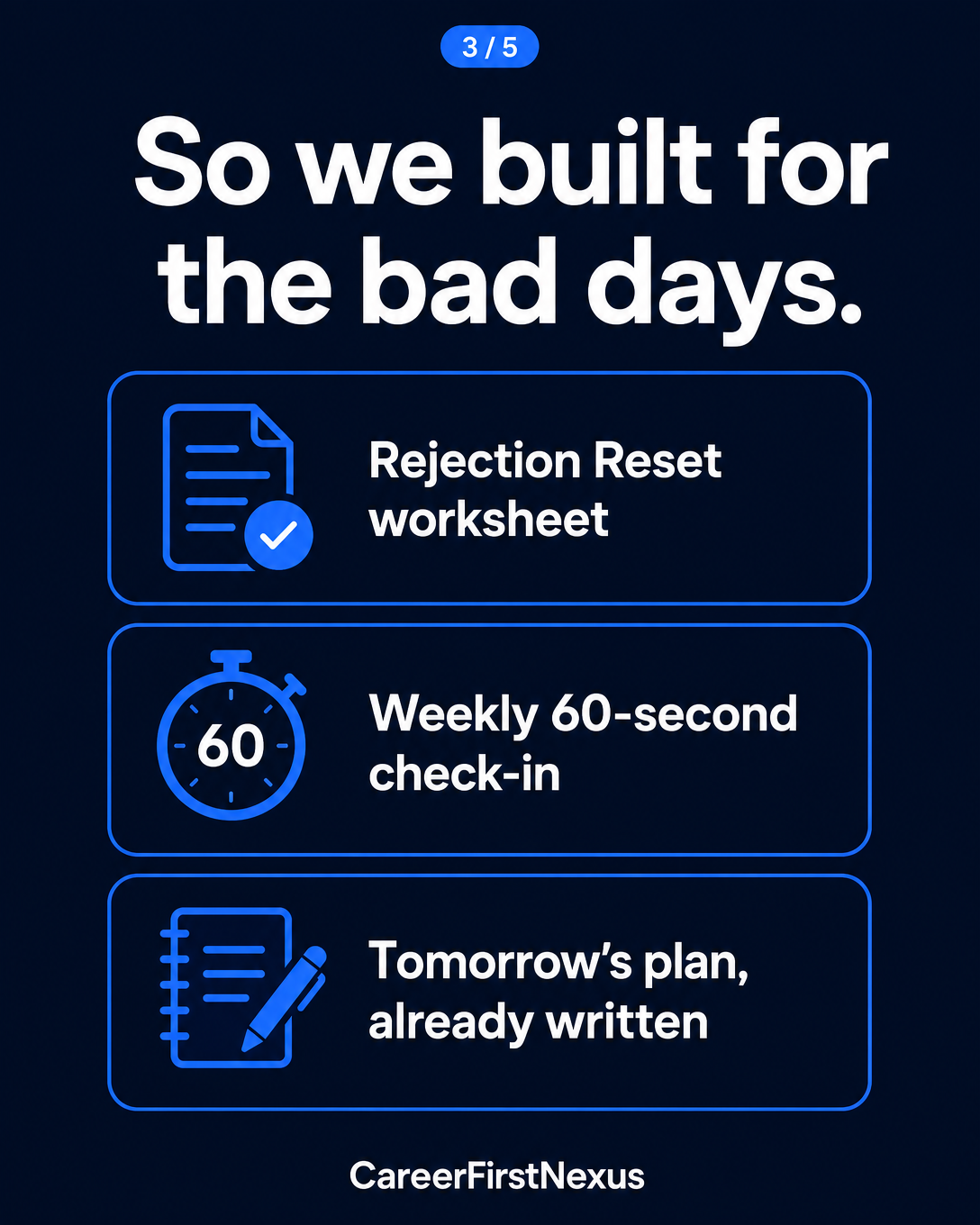
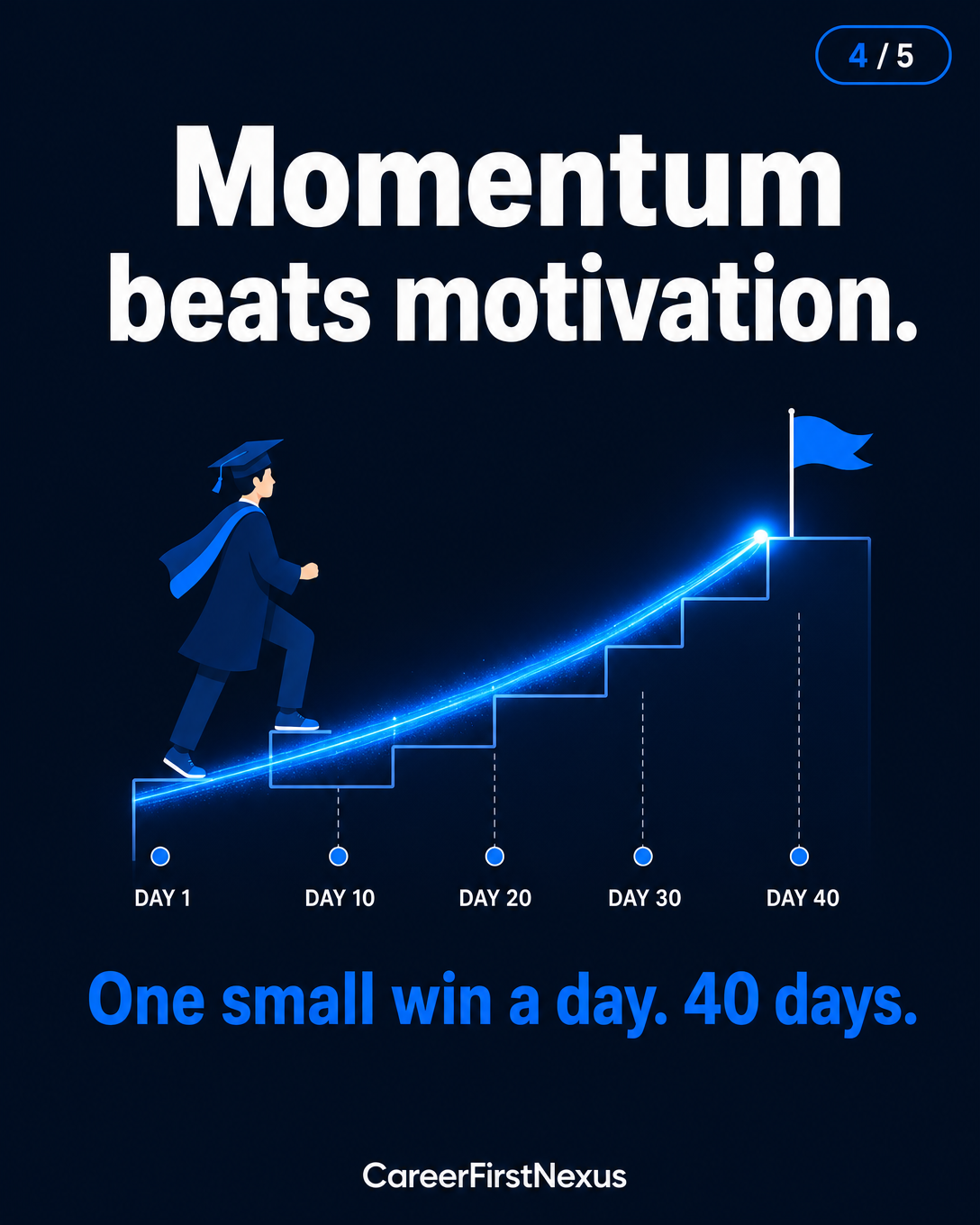
Swipe through what actually breaks a new grad's job search — and how Career First Nexus keeps them going through it.
If you're a parent
- What to say when your graduate hasn't heard back in 3 weeks
Exact words for parents when a graduate has applied for three weeks with no replies: what helps, what backfires, and what to ask instead.
- How to help your graduate find a job without nagging
Coach the process, not the applications. Use one weekly 15-minute check-in on applications, replies, and interviews—then stay out of the way.
- What do I do if my graduate won't look for a job?
What avoidance in a graduate job search usually means, the conversation that restarts it, and the process agreements that work better than ultimatums.
- What questions should I ask in a weekly job-search check-in?
The four questions and three numbers that make a 15-minute weekly job-search check-in useful instead of tense — plus what to skip.
- How much should a parent help with a graduate's job search?
Coach the process, never the individual application. What parents should do, what to hand back, and the line that costs graduates offers.
- My graduate moved back home — how do we set up the job search?
A short written agreement beats daily friction. Hours, contributions, a weekly review, and a review date — set in the first two weeks.
- What free resources exist for parents helping a graduate find a job?
The free tools a parent can actually use to help a graduate get hired — a weekly check-in script, a shared progress view, and what to stop doing.
- How can parents follow a college grad's job search progress without nagging?
How parents can follow a college grad's job search without daily questions: three numbers to watch, a weekly check-in, and a free read-only parent view.
- How to talk to your graduate about the job search at Thanksgiving
Free guide for parents: how to bring up the job search over Thanksgiving without a fight. One scheduled talk, three numbers, scripts for relatives, and a plan for December.
- Practical gifts for a college graduate who is looking for a job
Practical holiday and graduation gifts for a job-hunting college grad: interview clothes tailoring, a headshot, travel for interviews, a portfolio site, and free tools that help.
If you're the graduate
- How many jobs should a new grad apply to per day?
Aim for 3–5 tailored applications a day—about 15–25 a week. Why volume without tailoring fails, and how to track reply rate. Free new-grad job app.
- New grad resume: one page or two?
A new grad resume should be one page. The one exception for research and technical grads, what to cut first, and how page count works with ATS.
- Why am I not getting interviews after hundreds of applications?
Zero interviews after 100+ applications almost always comes down to one of three things: the resume, the targeting, or the follow-up. Here's how to tell which.
- How to get a new graduate resume past an ATS
ATS-safe formatting for new grads: one page, single column, standard headings, no tables/graphics, and keywords from the job description.
- What should I do when there's no response after applying for a job?
How long to wait, exactly what to send, and when to move on when a job application gets no reply — with a follow-up message a new grad can copy.
- What should a new grad do after a job rejection?
A short structured reset for new graduates after a rejection: record the stage, read the signal, make one change, and get back to the daily plan.
- How long does it take to find a job after college?
Most new grads need 3–6 months from first serious applications to an offer. Hiring cycles, stalled vs slow, and a free daily plan to keep moving.
- How do you get an entry-level job with no experience?
Entry-level postings that ask for two years of experience are describing a wish list. How new grads translate coursework and part-time work into evidence.
- What goes on a new grad resume with no work experience?
What to put on a resume with no work experience: the one-page order (summary, education, projects, any work, skills) and the exact bullet wording to use.
- How do you follow up after a job interview?
Send a thank-you within 24 hours, then one status check after the date they gave you. The exact wording, the timing, and when to stop.
- Where should new grads look for entry-level jobs?
Company career pages, niche boards, and referrals beat scrolling aggregators. Where new grad applications actually convert, and the weekly split.
- Free job search help for new graduates (ranked)
Ranked free help for new grads: campus career centers, American Job Centers, Handshake/LinkedIn, alumni, and a free 40-day daily system.
- What to do after graduation if you don’t have a job
Graduated with no job? Follow a week-by-week 30-day plan: targeting, ATS resume, applications, follow-ups, and when a bridge job helps.
- What does a 30-day job search plan for a new graduate look like?
A concrete 30-day job search plan for recent college graduates: targeting week, résumé week, then two weeks of tracked daily applications and follow-ups.
- How do you write a cover letter with no work experience?
A four-paragraph cover letter structure for new graduates with no full-time experience, plus what to write when your only jobs were part-time.
- What interview questions do new graduates get asked?
The interview questions new graduates actually get asked, why each one is asked, and how to answer with coursework and part-time work as evidence.
- Should a new graduate negotiate their first salary offer?
Yes, and here's the script. How much a new graduate can realistically negotiate on a first offer, what to say, and when not to push.
- The 40-day job search plan for new grads, day by day
A free 40-day job search plan for recent college grads: six phases from targeting and résumé to application sprints, interviews, and offers. Day by day.
- Is there a free job search app built for recent college grads?
Use free job-search tools to find entry-level roles, then use Career First Nexus to learn the application process, tailor, track, follow up, and prepare.
- What should a new grad's daily job search routine look like?
A daily job search routine for recent grads: follow-ups first, three 25-minute apply sprints, one networking touch, interview practice, then log it.
- How do you stay accountable in a job search after college?
How recent grads stay accountable in a job search: a daily plan with clear done, visible numbers, streaks, a weekly partner check-in, and co-working.
- What to say when relatives ask about your job search over the holidays
Free scripts for new grads: one-line answers for "any luck?", "have you tried Amazon?", and "when are you moving out?" at Thanksgiving and winter break.
- Companies hire in December: the BLS numbers and a December plan for new grads
Employers made 3.9 million hires in December 2025 before seasonal adjustment (BLS JOLTS). Free guide for new grads: what slows down in December and what to do each week.
- A winter break job search plan for new grads (Dec 1 to Jan 9)
Free 40-day winter break job search plan for recent grads, Dec 1 to Jan 9: targeting, résumé, application sprints, holiday networking, and a January restart.
Getting hired, by degree
What each major actually gets hired into, the real hiring cycle, and the gap that stalls those graduates most often.
- Accounting degree
- Architecture degree
- Biology degree
- Business Administration degree
- Chemistry degree
- Civil Engineering degree
- Communications degree
- Computer Engineering degree
- Computer Science degree
- Construction Management degree
- Criminal Justice degree
- Cybersecurity degree
- Data Science degree
- Economics degree
- Education degree
- Electrical Engineering degree
- English degree
- Environmental Science degree
- Film and Media degree
- Finance degree
- Fine Arts degree
- Graphic Design degree
- History degree
- Hospitality Management degree
- Human Resources degree
- Industrial Engineering degree
- Information Technology degree
- International Relations degree
- Journalism degree
- Kinesiology degree
- Liberal Arts degree
- Management Information Systems degree
- Marketing degree
- Mathematics degree
- Mechanical Engineering degree
- Nursing degree
- Nutrition and Dietetics degree
- Physics degree
- Political Science degree
- Psychology degree
- Public Health degree
- Social Work degree
- Sociology degree
- Sports Management degree
- Supply Chain Management degree
Comparing your options
Want the whole system, not just the answers?
Free for the graduate and the parent, no card required. A 40-day daily plan, ATS-safe resume templates, an application tracker, and weekly check-in scripts.